




- April 3, 2026
- No Comments
Helper T Cells from Stem Cells: A Cancer Immunotherapy Breakthrough | Jeevasa Clinical Perspective
Jeevasa Clinical Perspective: Cancer Immunotherapy Breakthrough Based on Recent Research from the University of British Columbia (ScienceDaily, January 2026)
JEEVASA HEALTHCARE USA, CHANDIGARH
Regenerative Medicine & Stem Cell Division
Overview
A major scientific breakthrough (January 2026, University of British Columbia) has solved a long-standing challenge in cancer immunotherapy — the ability to reliably grow helper T cells from stem cells.This development brings us closer to more effective, scalable, and accessible cancer therapies.
At Jeevasa Hospitals, we present our clinical perspective on what this means for patients in India.
Why This Breakthrough Matters
Modern cancer treatment is increasingly based on immunotherapy — using the body’s own immune system to fight cancer.
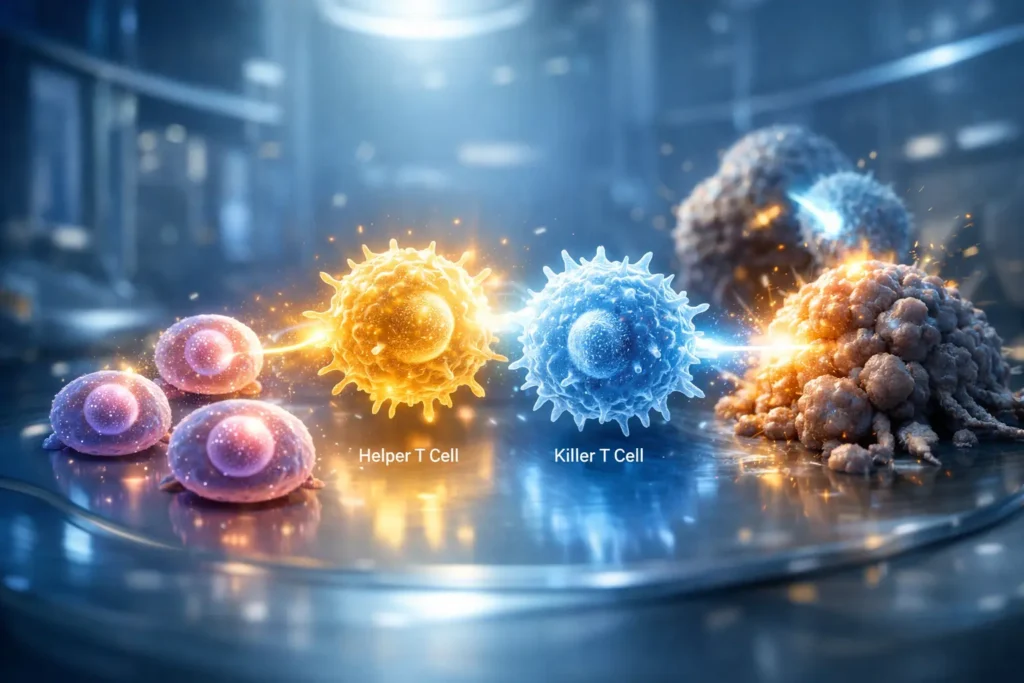
These therapies depend on two key immune cells:
• Killer T cells – directly attack cancer cells
• Helper T cells – coordinate and strengthen the immune response
While killer T cells do the attacking, helper T cells ensure the response is strong and sustained.
Without helper T cells, the immune system becomes weak over time — reducing treatment effectiveness.
The Challenge Until Now
Over the past decade, therapies like CAR-T have shown powerful results by turning immune cells into “living drugs.”
However, there have been major limitations:
• High cost
• Complex manufacturing
• Long preparation time
• Dependence on patient’s own cells
• Variable long-term effectiveness
One key missing piece was the inability to reliably produce helper T cells from stem cells.
What Scientists Have Achieved
Researchers at the University of British Columbia have now solved this problem.
According to Dr. Peter Zandstra, this breakthrough provides a reliable and scalable way to produce immune cells, improving access to advanced therapies.
They discovered that a biological signal called Notch controls how stem cells develop into immune cells.
• Early Notch signal → required for T cell development
• Prolonged Notch signal → prevents helper T cell formation
By precisely controlling this timing, scientists successfully produced functional helper T cells in the laboratory.
These cells are important because:
• Function similarly to natural immune cells
• Show proper maturity
• Can develop into specialized immune subtypes
How This May Help Patients
This breakthrough allows scientists to produce both:
• Helper T cells
• Killer T cells
from the same stem cell source.
This can improve:
• Stronger and longer-lasting cancer treatments
• Better success rates in immunotherapy
• Scalable production of immune cells
• More consistent treatment outcomes
Future: Easily Available Treatments
One of the most important impacts of this discovery is the possibility of off-the-shelf therapies.
Currently:
• Treatments are made individually for each patient
• This takes weeks and is very expensive
In the future:
• Therapies can be manufactured in advance
• Stored and used when needed
• Made from renewable stem cell sources
This could make treatments:
• Faster
• More affordable
• Widely accessible
Current Situation
It is important to understand:
• This research is still being tested in laboratories
• These treatments are not yet available for regular patient care
• It will take a few more years for testing, safety checks, and approvals
Patients are advised to consult qualified doctors before choosing any treatment.
Jeevasa Hospitals Perspective
At Jeevasa Hospitals, we closely follow advances in regenerative medicine and cancer immunotherapy.
We believe:
We are committed to providing safe, proven treatments that give patients real hope and confidence
We believe new discoveries give hope, but they should be used only when they are proven safe and effective.
This is not a treatment available today, but it is an important step that may improve cancer treatment in the future.
It also shows that medical science is continuously advancing to provide better and more effective treatment options for patients.
What Is Available Today
Patients in India currently have access to:
• TIL Therapy (Tumor-Infiltrating Lymphocytes)
• NK Cell Therapy (Natural Killer Cells)
• Dendritic Cell (DC) Vaccine Therapy
Our Approach at Jeevasa
We provide:
• Expert evaluation for advanced cancer therapies
• Guidance on approved immunotherapy and transplant-based treatment options
• Support for clinical trial awareness and eligibility
• Honest, evidence-based medical advice
Simple Message for Patients
This discovery gives new hope in cancer treatment.
It may bring:
• Better results
• More options for patients
• Improved recovery
However, the most important step for patients remains:
Accurate diagnosis, expert consultation, and evidence-based treatment.
Disclaimer
This article is an educational and clinical commentary based on published scientific research. It does not constitute medical advice.
All treatment decisions should be made in consultation with qualified healthcare professionals.